> For the complete documentation index, see [llms.txt](https://docs.bugbug.io/llms.txt). Markdown versions of documentation pages are available by appending `.md` to page URLs; this page is available as [Markdown](https://docs.bugbug.io/creating-tests/recording-the-tests.md).
# Your first test
Learn the basics of creating your first automated test with BugBug. The process is very simple and doesn't require any coding knowledge. See how easy it is to run your first test.
## Learn the basics
If you're new to test automation, see our "[**how to" guide -->**](/in-depth-guides/beginners-tutorial-to-automation-testing.md)
{% hint style="success" %}
[Read how to prepare your app for automated testing and avoid common pitfalls.](/best-practices.md#how-to-prepare-your-app-for-testing)
{% endhint %}
## Create your first test
1. Think upfront of what do you want to test - choose a one simple use case
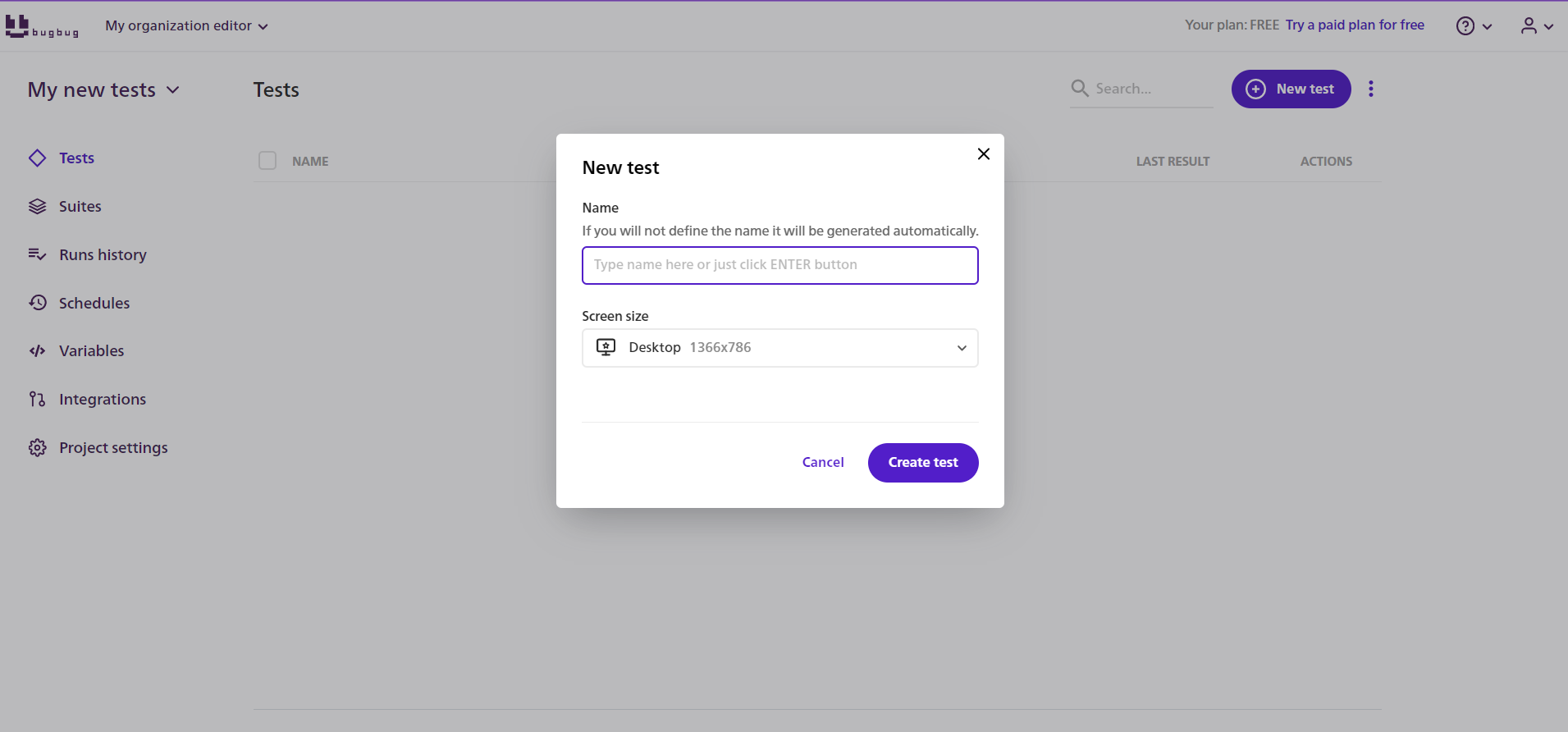
2. Create a new test
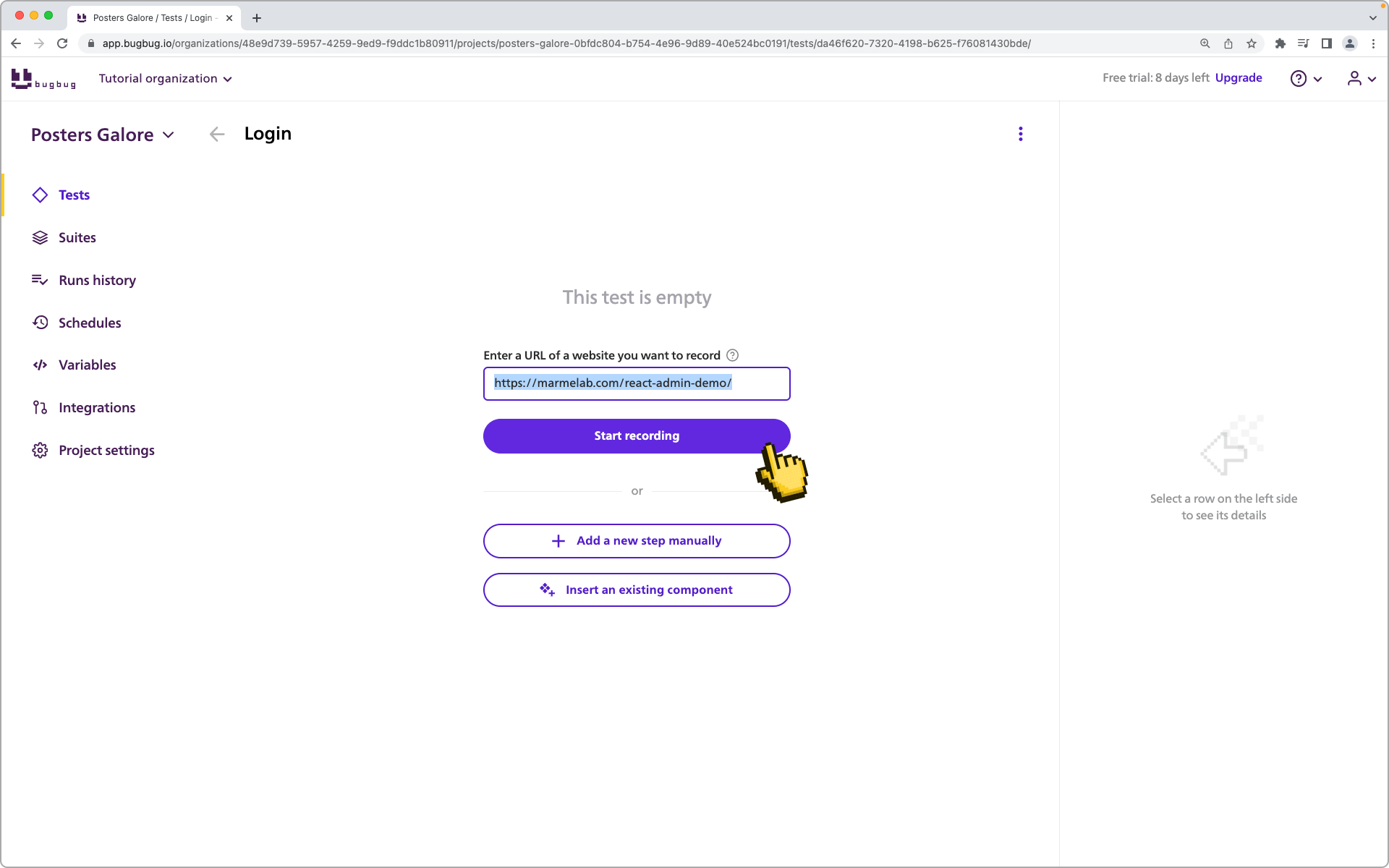
3. Enter the URL of the web app or website that you want to test
4. Click "Record" - if you [installed the extension](/quick-start/install-test-recorder.md), the incognito Chrome browser window should appear
5. Carefully click the elements to navigate - each click will be recorded automatically
6. Don't forget that [hovers are not automatically recorded](/recording-tests-steps/recording-hover.md)
7. When you are ready with the test case click the `Finish and close` button in the [overlay menu](/recording-tests-steps/bugbug-ai-test-recorder.md) on the right
8. Now run the test to see if everything was correctly recorded
{% hint style="danger" %}
**Hovers are not automatically recorded!** You need to [record in hover mode](/recording-tests-steps/recording-hover.md) by activating it in the [recording overlay](/recording-tests-steps/bugbug-ai-test-recorder.md).
{% endhint %}
{% hint style="info" %}
BugBug recording does not support multiple browser window testing. You can only record in one window, but we support multiple tabs and user movement between them.
{% endhint %}
## Manually reviewing and adding steps after the recording
You don't need to use recording, you can also create your tests step by step by adding particular actions and their parameters. This is however much slower!
You can [manually edit steps](/editing-tests/manually-creating-the-test.md) anywhere in your test by clicking the plus symbol between the rows.

You can modify the particular step when some element is not correctly caught by the BugBug's recording. Edit, run the test again, and check if it is working!
---
# Agent Instructions
This documentation is published with GitBook. GitBook is the documentation platform designed so that both humans and AI agents can read, navigate, and reason over technical content effectively. Learn more at gitbook.com.
## Querying This Documentation
If you need additional information that is not directly available in this page, you can query the documentation by asking a question.
Perform an HTTP GET request on the following URL with the `ask` and `goal` query parameters:
```
GET https://docs.bugbug.io/creating-tests/recording-the-tests.md?ask=&goal=
```
`ask` is the immediate question: it should be specific, self-contained, and written in natural language.
`goal` is what the user is ultimately trying to achieve, the reason they need the answer. Sharing it helps GitBook give you a better, more relevant answer. A goal is most helpful when it describes the outcome the user wants rather than restating the question. For example, with `ask=how do I create an API token`, a goal like `automate deployments from our CI pipeline` lets GitBook tailor the answer to that use case.
The response will contain a direct answer to the question and relevant excerpts and sources from the documentation.
Use this mechanism when the answer is not explicitly present in the current page, you need clarification or additional context, or you want to retrieve related documentation sections.